 USA
USA  Canada
  Brazil
  Germany
  France
  Italy
Italy  Switzerland
  Sweden
  Spain
Spain  Great Britain
  Russia
  South Africa
  Japan
Japan  New Zealand
  Australia
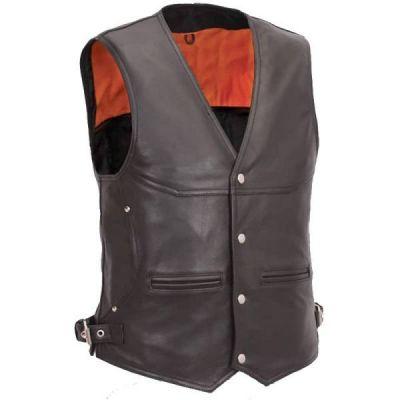
Motorcycle riders know that comfort and practicality count on the road. A leather gives easy access to a wallet, phone or small tools without a bag, while keeping the arms free. This guide covers what the style offers, what to check before buying and how to wear it.
Key Takeaways
- A leather vest with pockets keeps essentials within reach and leaves the arms free to move.
- A vest covers the torso only, so it is a layering and style piece, not a substitute for an abrasion-tested jacket.
- Check pocket placement, closure type and how the fit works over layers.
- Garments tested to EN 17092 carry a stated protection class.
Why Choose a Leather Vest with Pockets?
A leather vest is a long-standing part of biker clothing. Leather is a tough, flexible material, and the pockets make the vest practical: essentials stay on the body instead of in a backpack.
- Practicality: pockets within easy reach keep a phone, wallet or keys close.
- Freedom of movement: without sleeves, a vest leaves the shoulders and arms unrestricted, which helps on long rides and in tight spaces.
- Style: leather vests are a staple of biker fashion and sit over a t-shirt, hoodie or shirt.
What to Check Before Buying
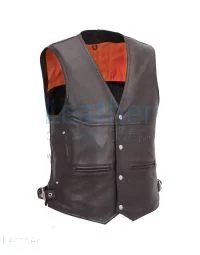
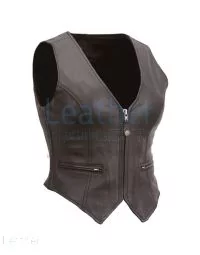
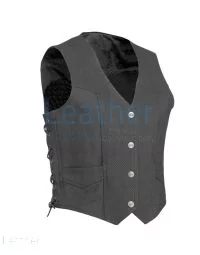
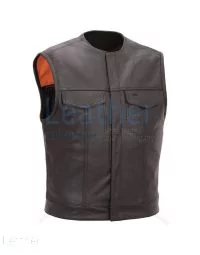
The vest with pockets is made of leather and has several pockets for everyday items. Beyond that, a few points separate a useful vest from an ordinary one:
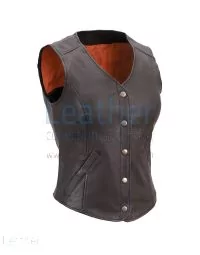
- Pocket placement: pockets should be reachable while seated on a bike and should close securely. For the same idea in a snap-front cut, see the .
- Fit and closure: the vest should sit comfortably over a t-shirt and still close over a thicker layer. Side adjusters or a snap front help.
- Warm-weather option: perforated leather lets air through; the is built around that idea.
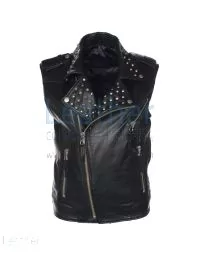
- Details: a studded collar adds a more rugged look, as on the .
Vest or Jacket: Know the Difference
A vest leaves the arms bare, so it does not give the abrasion protection of a jacket. The European standard for motorcycle clothing, EN 17092, sets requirements for garments in classes AAA, AA, A, B and C, according to SATRA, and Regulation (EU) 2016/425 on personal protective equipment has applied since 21 April 2018 (EUR-Lex). Riders who want armor and a stated protection class should look for both on the garment; the vest can be worn over or alongside the vest over or alongside a jacket such as the .
How to Style a Leather Vest with Pockets
A is versatile and suits several occasions:
- Casual biker look: a plain black t-shirt, jeans and boots.
- Layered style: over a hoodie or a light jacket in cooler weather.
- Outdoor days: over a flannel shirt, with the pockets holding small items.
Caring for the Vest
Follow the garment's care label; the right cleaner or conditioner depends on the finish. Wiping off dust after a ride, keeping the vest away from direct heat and storing it on a wide hanger are common habits. Leather softens and shapes to the wearer over time, so a vest that starts stiff usually becomes more comfortable with use.
Frequently Asked Questions
Is a leather vest with pockets safe for riding?
A vest covers the torso and leaves the arms exposed, so it offers less coverage than a jacket. Protection is described by EN 17092 classes, and only garments tested to that standard carry a class. Many riders wear a vest as a layer and rely on a tested jacket or armor for protection.
What should be kept in vest pockets?
Light, flat items such as a phone, wallet, keys or a small tool suit the pockets. Heavy or hard objects can press against the body in a fall or while seated, so they are better stored in a luggage bag. Pockets that close with a zip or snap keep items from falling out at speed.
How should a leather vest fit?
It should sit comfortably over a t-shirt without pulling across the shoulders, and close over a thicker layer such as a hoodie. Adjusters at the sides or a snap front make that easier. The armholes should not restrict reaching for the handlebars.
How is a leather vest cleaned?
Follow the care label; the right cleaner or conditioner depends on the finish. A soft cloth removes dust, and soaking the leather or drying it near a radiator should be avoided because heat and excess moisture can damage the leather. Test any cleaner or conditioner on a hidden area before using it on the whole vest.
Written by the Leather Collection Editorial Team.