 USA
 Canada
 Brazil
 Germany
 France
 Italy
 Switzerland
 Sweden
 Spain
 Great Britain
 Russia
 South Africa
 Japan
 New Zealand
 Australia

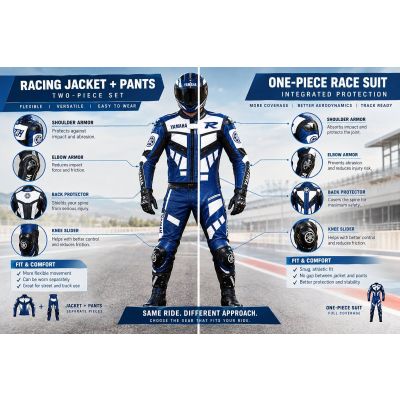
When you're shopping for motorcycle protective gear, one of the biggest decisions is choosing between a racing jacket and a full race suit. Both are built for protection, but they serve different riders and riding styles. A motorcycle racing jacket offers flexibility and can be paired with separate riding pants, while a full race suit integrates the jacket and pants into one cohesive system. Understanding the differences—and knowing which fits your actual riding needs—helps you make a smarter purchase and get better protection on the road.
This comparison breaks down the real differences between a motorcycle racing jacket and a full race suit, explains what matters most for your protection, and helps you decide which option makes sense for your riding style, budget, and comfort needs.
Quick Comparison Answer
A motorcycle racing jacket works best for riders who want flexibility, the option to mix and match gear, or who ride in varied conditions where layering matters. A full race suit is designed for riders who want complete integrated protection, better armor coordination, consistent fit, and gear built specifically for sustained high-performance riding or track use. The better choice depends on how often you ride, what speeds and conditions you face, whether you value versatility or dedicated protection, and your budget. Neither option is automatically superior—the right pick matches your real riding use.
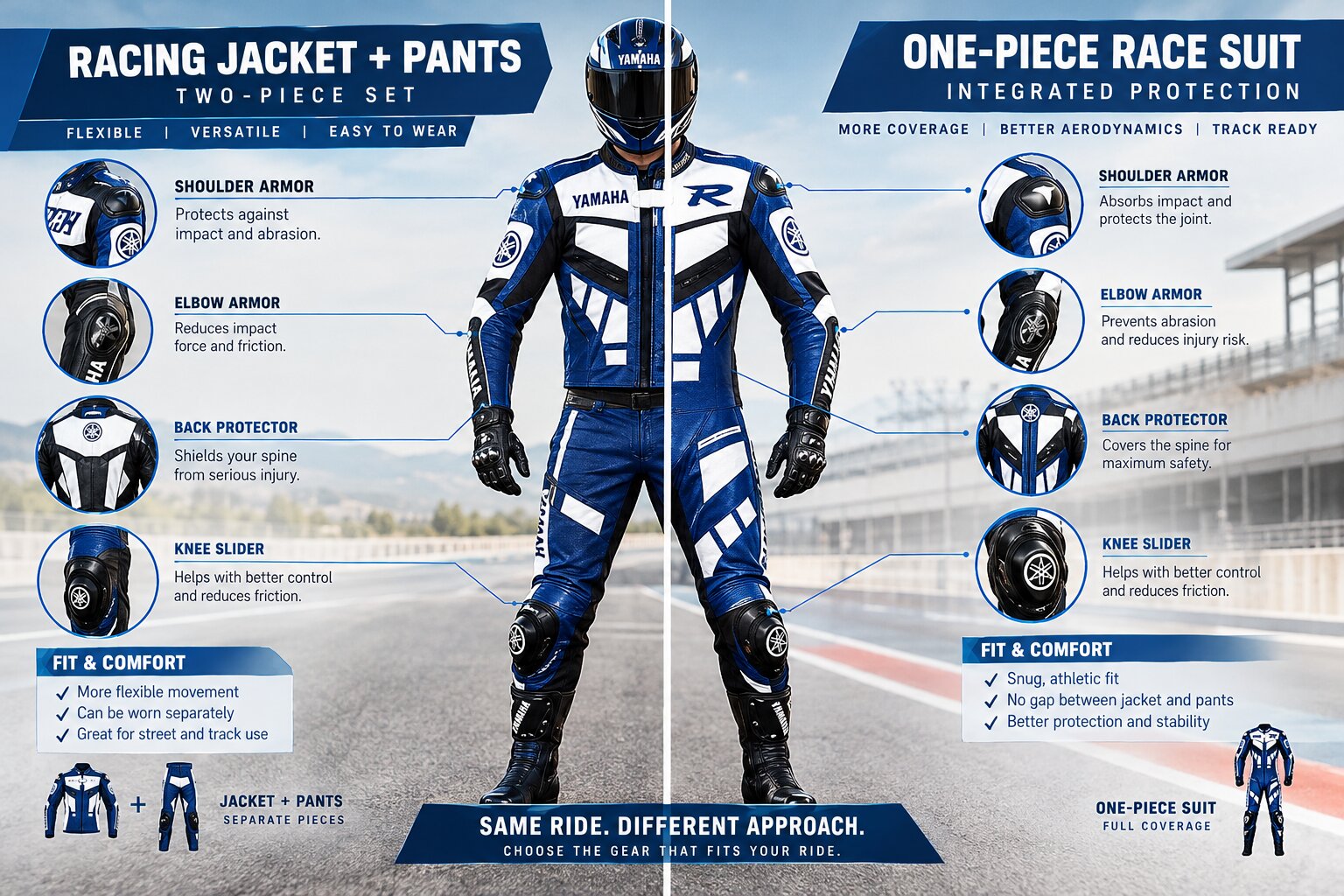
Table of Contents
- What Is the Main Difference Between a Racing Jacket and a Full Race Suit?
- Which Option Offers Better Rider Protection?
- Which Option Feels More Comfortable on the Bike?
- Which Option Gives You More Flexibility?
- How Do Armor Coverage and Placement Differ?
- Racing Jacket vs Full Suit for Different Riding Styles
- Why Proper Fit Matters More Than You Think
- Which Option Offers Better Long-Term Value?
- Pros and Cons of Each Option
- Common Mistakes Buyers Make When Comparing Jackets and Suits
- Which Option Should You Choose?
- Final Advice from Leather Collection
What Is the Main Difference Between a Racing Jacket and a Full Race Suit?
The core difference is simple: a motorcycle racing jacket is a standalone upper-body protective layer, while a full race suit combines the jacket and pants into one integrated system. When you buy a racing jacket, you pair it with separate riding pants of your choice. With a full race suit, the jacket and pants work together as designed, with matched armor placement, aligned seams, and protection built around how you sit on the bike.
A racing jacket gives you options. You can wear it with different pants depending on the weather, your riding style, or what you already own. You can upgrade one piece at a time instead of replacing everything. A full race suit removes that choice but adds coordination. The armor in the shoulders, elbows, back, hips, and knees is positioned with the entire riding posture in mind, not just individual pieces.
Which Option Offers Better Rider Protection?
Protection depends more on construction quality, armor type, fit, and how well armor stays positioned than on whether you choose a jacket or suit. A high-quality racing jacket paired with well-fitted riding pants can offer protection equal to or better than a lower-quality suit. Conversely, a premium full race suit with superior materials, armor integration, and fit will protect better than a budget racing jacket and random pants combination.
The advantage of a full race suit is consistency. The jacket and pants are engineered together. Armor pockets align with your knees, hips, shoulders, and elbows in the riding position. There are no gaps where the jacket meets the pants. Zippers, straps, and attachment points work as one system. When you sit on the bike, everything stays in place.
With a racing jacket and separate pants, you have more responsibility. You must choose pants with good armor pockets, ensure the fit works in riding position, and make sure the jacket and pants work together—not against each other. If the jacket rides up or the pants shift, protection gaps can form. This doesn't mean a jacket-and-pants combo can't be protective; it means you need to pay closer attention to fit and construction quality.
Which Option Feels More Comfortable on the Bike?
A full race suit is typically more comfortable for sustained riding because it's designed around riding posture. The panels, stretch zones, and armor pockets are positioned for when you're bent forward on the bike, not standing upright. You get better mobility, less bunching, and armor that stays where it should.
A racing jacket can feel comfortable too, but comfort depends on how well it works with your pants. If the jacket is cut for aggressive riding and your pants aren't, you might feel restricted or uncomfortable. If the jacket is too loose, it can shift during hard cornering or braking. The fit must work as a system.
For longer rides, especially on the track or at sustained speeds, a full race suit often wins on comfort because everything is integrated. For shorter urban rides or mixed riding, a racing jacket paired with well-chosen pants can be just as comfortable and offers more versatility.
Which Option Gives You More Flexibility?
A racing jacket wins on flexibility. You can wear it with different pants depending on weather, riding style, or what you own. In summer, pair it with mesh or vented riding pants. In winter, add heavier textile or leather pants. On the track, wear it with race-specific pants. For commuting, wear it with armored jeans. One jacket, many options.
A full race suit is less flexible. You're committed to that one system. If you want to change your riding style or conditions, you might need to buy a different suit. However, some premium race suits offer removable liners, ventilation options, or modular components that add some flexibility within the system.
If you own multiple bikes or ride in very different conditions, a racing jacket with the ability to mix pants is practical. If you ride one style consistently—track days, sportbike road riding, or serious commuting—a full race suit's integration and consistency matter more.
How Do Armor Coverage and Placement Differ?
A full race suit typically offers more comprehensive armor coverage because every piece is designed around the same riding position. You get shoulder armor, elbow armor, back protection, hip armor, and knee armor all positioned to work together. The suit is engineered so armor doesn't shift when you brake hard or corner aggressively.
A racing jacket includes shoulder, elbow, and often back armor. Your separate pants provide knee and hip armor. The challenge is making sure the pieces coordinate. If your jacket is designed for a more upright position and your pants for an aggressive crouch, the armor alignment might not be ideal. This is why fit and construction quality matter so much when mixing pieces.
CE armor ratings (EN 1621 Level 1 or Level 2) apply to individual protectors, not the whole system. A racing jacket might have Level 2 elbow armor and Level 1 back protection. Your pants might have Level 2 knee armor. The overall protection depends on what armor you choose and how well it stays positioned during riding. A full race suit coordinates this for you; a jacket-and-pants combo requires you to think it through.
Racing Jacket vs Full Suit for Different Riding Styles
Track and High-Performance Riding
For track days, racing schools, or sustained high-speed road riding, a full race suit is the better choice. It's built for aggressive cornering, hard braking, and the riding position you hold for hours. Armor stays positioned, materials are tested for abrasion at speed, and the suit is engineered for that specific use. Professional racers and track-day enthusiasts choose full suits because protection and fit are optimized.
Sportbike Road Riding
A racing jacket paired with quality riding pants works well for sportbike road riding. You get good protection, flexibility to adjust for weather, and the option to upgrade one piece at a time. Many serious sportbike riders use this setup because it balances protection, comfort, and versatility.
City Commuting and Mixed Riding
For city commuting, short urban trips, and mixed riding, a racing jacket with versatile pants is practical. You can wear lighter pants in summer and heavier pants in winter. You can choose pants that look more casual or more technical depending on where you're riding. A full race suit might feel over-engineered for city speeds and conditions, though some riders prefer the integration and don't mind the dedicated look.
Cruiser and Touring Riding
Cruiser and touring riders often prefer leather jackets and separate pants because they want a more classic look and the ability to adjust for long days in the saddle. A racing jacket is more aggressive in design, and a full race suit is too technical for this style. However, if you ride a cruiser aggressively or want maximum protection, a racing jacket or even a race suit can work if fit and comfort allow.
Why Proper Fit Matters More Than You Think
Fit is where many buyers make mistakes. A racing jacket that's too large will shift during hard riding, leaving gaps in protection. A full race suit that's too small will restrict movement and pull armor out of position. Either way, protection fails not because the gear is bad, but because it doesn't fit your body and riding position.
When trying on a racing jacket, sit on the bike—don't just stand. Check that the jacket stays in place when you lean forward. The sleeves should reach your wrists with your arms extended. The length should cover your lower back and hips when you're bent in riding position. Armor should sit over your shoulders and elbows, not shift toward your neck or upper arm.
With a full race suit, the same rules apply, but you're checking the entire system. Sit on the bike. Check that the jacket and pants work together. Make sure the armor at your hips and knees stays positioned when you're seated. The suit should feel snug enough to stay put but not so tight that you can't move or breathe comfortably.
If you're between sizes, try both. Don't assume smaller is better for protection—a too-small suit will be uncomfortable and might actually shift more. Don't assume larger is more comfortable—too-large gear leaves gaps. The fit must match your body and your riding position.
Custom sizing is worth considering if you're outside standard sizing ranges. Leather Collection and other premium brands offer custom fits for riders who need adjustments. The investment in proper fit pays back in comfort, protection, and how long you'll actually wear the gear.
Which Option Offers Better Long-Term Value?
A racing jacket can offer better value if you ride in varied conditions or own multiple bikes. You buy one jacket and pair it with different pants as needed. If your riding style changes, you can upgrade one piece without replacing everything. If a jacket gets damaged, you replace the jacket, not the whole suit.
A full race suit can offer better value if you ride one style consistently and ride frequently. You're not buying and upgrading multiple pieces. The integrated design means less waste and better coordination. However, if the suit gets damaged, repair or replacement involves the whole system, which can be more expensive.
Long-term durability depends on material quality, construction, how often you ride, how you care for your gear, and whether the gear has been crashed. A well-made racing jacket and quality pants can last as long as a full race suit if maintained properly. A full race suit might last longer if you ride hard frequently because the integration means less movement and stress on individual pieces.
Riders who wear their gear regularly and maintain it properly get good value from both options. Riders who ride occasionally might get better value from a racing jacket because they don't need the dedicated integration of a full suit.
Pros and Cons of Each Option
Motorcycle Racing Jacket: Pros
- Flexible pairing with different riding pants
- Ability to adjust for weather and riding style
- Option to upgrade one piece at a time
- Better for riders who own multiple bikes
- Can be used with casual or technical pants depending on your need
- Easier to repair or replace one piece
- Good protection when paired with quality pants
Motorcycle Racing Jacket: Cons
- Requires careful selection of matching pants
- Protection depends on how well jacket and pants coordinate
- Armor alignment is your responsibility
- Fit gaps can form if pieces don't work together
- Less optimized for specific riding positions
- Requires more thought when building a protective system
Full Race Suit: Pros
- Integrated armor placement and coverage
- Engineered for specific riding posture
- Consistent fit and protection
- No gaps between jacket and pants
- Better for track and high-performance riding
- Optimized comfort for sustained riding
- Professional-level protection and design
Full Race Suit: Cons
- Less flexible for different riding styles
- Higher initial cost
- Replacement involves the whole system
- May feel over-engineered for casual riding
- Requires careful sizing
- Less practical for mixed-condition riding
- More technical appearance off the bike
Common Mistakes Buyers Make When Comparing Jackets and Suits
Choosing Based on Price Alone
A cheap racing jacket won't protect as well as a quality jacket, no matter how good the price. A cheap full race suit won't offer the protection or durability of a premium suit. Build your decision around construction quality, materials, armor ratings, and fit—not just cost. A higher investment in better gear pays back in protection and longevity.
Assuming a Jacket Is Always Less Protective
A well-made racing jacket with quality armor and proper fit can protect as well as a full suit. Don't assume a suit is automatically safer. Protection depends on materials, armor, construction, fit, and how well the gear stays positioned during riding.
Ignoring Fit in Riding Position
Many buyers try on gear standing up and assume the fit is good. Then they sit on the bike and realize the jacket rides up, the pants shift, or armor moves out of position. Always check fit in riding position. This is the most common protection mistake.
Mixing Poor-Quality Pieces
If you choose a racing jacket, don't pair it with cheap riding pants. The weak link breaks the system. Invest in quality pants that match the jacket's construction and protection level. The combination is only as good as the weaker piece.
Forgetting About Other Gear
Riders often focus on the jacket or suit and forget gloves, boots, and a helmet. Your whole body needs protection. A great race suit doesn't protect your hands or feet. Include gloves and boots in your gear budget.
Not Checking Armor Ratings and Placement
Don't assume a jacket or suit is protective just because it looks aggressive. Check the label for EN 1621 armor ratings (Level 1 or Level 2). Verify that armor covers your shoulders, elbows, back, hips, and knees. Understand what protection you're actually getting.
Choosing Based on Looks Alone
A stunning-looking suit that doesn't fit right won't protect you. A plain-looking jacket that fits perfectly and has quality armor will. Let fit, construction, and protection drive your choice, not style alone.
Which Option Should You Choose?
Choose a Racing Jacket If You:
- Ride in varied conditions and need flexibility
- Own multiple bikes with different riding styles
- Want to upgrade gear gradually
- Ride shorter distances or mixed urban/road riding
- Prefer to mix and match gear based on weather
- Want the option to replace one piece without replacing everything
- Are building your first protective gear setup
Choose a Full Race Suit If You:
- Ride track days or high-performance road riding regularly
- Want integrated armor coverage and coordination
- Ride one style consistently
- Prefer optimized fit for your specific riding position
- Want professional-level protection and durability
- Ride longer distances and need sustained comfort
- Are willing to invest in dedicated, engineered protection
Riders who want better protection for varied riding styles can explore our
to find racing jackets, race suits, and protective pants designed for different riding needs and body types.Final Advice from Leather Collection
The choice between a motorcycle racing jacket and a full race suit comes down to your riding style, how you want to build your gear system, and what protection matters most to you. A racing jacket offers flexibility and the ability to adapt to different conditions. A full race suit offers integrated protection, optimized fit, and professional-level design for serious riding.
Before you buy, sit on your bike in the gear you're considering. Check the fit in riding position. Look for quality construction, proper armor placement, and EN 1621 ratings. Don't choose based on looks or price alone. Remember that a jacket or suit is only part of your protection—include gloves, boots, and a helmet in your gear strategy.
For riders comparing real protective gear and building a complete setup, the
shows how quality construction, proper armor integration, and thoughtful fit work together to support better protection and comfort.Whether you choose a racing jacket or a full race suit, invest in quality, check the fit, and wear your gear every time you ride. Your protection depends on it.
Frequently Asked Questions
Can I wear a racing jacket without a matching suit?
Yes. A racing jacket works with any riding pants that fit well and have good armor. The key is choosing pants with quality construction, proper armor placement, and a fit that works in riding position. Make sure the jacket and pants coordinate—they should work together as a system, not fight each other. Check the fit in riding position before buying.
Is a full race suit always safer than a racing jacket and pants?
Not automatically. A high-quality racing jacket paired with well-fitted, quality riding pants can offer protection equal to or better than a lower-quality full race suit. Protection depends on materials, armor ratings, construction, fit, and how well armor stays positioned. A full race suit's advantage is that the integration is engineered for you—armor placement and coordination are optimized. With a jacket and pants combo, you have more responsibility to choose pieces that work together.
What armor ratings should I look for?
Look for EN 1621 armor ratings on the label. Level 1 is the basic impact rating; Level 2 is higher performance. Check that armor covers your shoulders, elbows, back, hips, and knees. Make sure the armor stays positioned in riding posture. Don't confuse EN 17092 garment ratings (which measure abrasion and tear strength) with EN 1621 armor ratings (which measure impact protection). You need both.
Should I buy a racing jacket or suit if I only ride in the city?
For city riding, a racing jacket with quality riding pants might be more practical than a full race suit because you want flexibility and comfort for lower speeds. However, if you ride aggressively or want maximum protection even in the city, a racing jacket or suit is still a good choice. The key is proper fit and armor placement, regardless of your riding speed. Don't assume city riding means you don't need good protection.
Can I repair a racing jacket or race suit after a crash?
Minor repairs such as seam fixes or zipper replacement are sometimes possible, but crash-damaged protective gear should be inspected carefully. Armor that has absorbed impact may be compromised and should be checked or replaced. Abrasion damage that exposes the protective layers might be repairable, but it depends on the damage extent. Check with the manufacturer or a qualified repair service. In many cases, crash-damaged gear should be replaced rather than repaired to ensure protection integrity.
How do I know if a racing jacket or suit fits correctly?
Fit must be checked in riding position, not standing up. Sit on your bike and check that the jacket stays in place when you lean forward. Sleeves should reach your wrists with arms extended. The jacket length should cover your lower back when bent. With a full suit, make sure the pants fit in riding posture and armor stays positioned over your knees and hips. The gear should be snug enough to stay put but not so tight that you can't move or breathe. If you're unsure, ask the retailer or manufacturer about fit or consider custom sizing.
What's the difference between EN 17092 and EN 1621?
EN 17092 applies to the whole motorcycle garment—jacket, pants, or suit. It measures abrasion resistance, tear strength, and seam strength. It doesn't measure armor impact performance. EN 1621 applies specifically to impact protectors such as knee, hip, elbow, and back armor. It rates armor as Level 1 or Level 2 based on impact performance. You need both: a good EN 17092 garment rating for abrasion resistance and good EN 1621 armor for impact protection. They measure different things.