 USA
USA  Canada
  Brazil
  Germany
  France
  Italy
Italy  Switzerland
  Sweden
  Spain
Spain  Great Britain
  Russia
  South Africa
  Japan
Japan  New Zealand
  Australia

Well-made can stay in use for many years, but without maintenance leather can fade, crack or lose its suppleness. Cleaning, conditioning where the maker recommends it, and correct storage are what keep a jacket looking good. This guide explains the care routine step by step, from identifying the leather to repairs.
Key Takeaways
- Know the leather type first, because it decides which cleaning and conditioning products are suitable.
- Follow the care label or the maker's instructions; cleaning and conditioning products depend on the leather's finish and construction.
- Store the jacket on a wide, padded hanger in a cool, dry place away from direct sunlight and heat.
- If the jacket gets wet, blot it and let it air-dry naturally, away from direct heat.
1. Understand Your Leather
The first step is knowing what the jacket is made of. Full-grain leather keeps the natural grain of the hide and develops a patina with age, while other grades are processed more heavily or come from inner layers of the hide. "Genuine leather" says little on its own, so the maker's description of the grade is worth checking. A finished, dyed or coated surface reacts differently to cleaners than raw or aniline leather, so test any product on a hidden spot first.
2. Clean Regularly
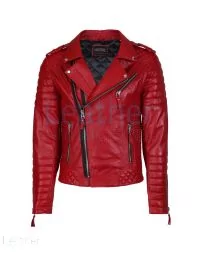
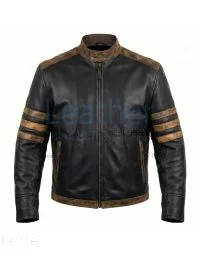
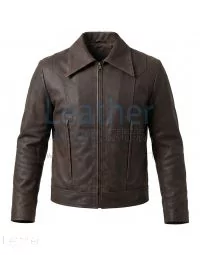
A jacket such as the should be cleaned regularly to remove dirt, dust and body oils. For spot cleaning, dampen a soft cloth without soaking it and gently blot the stain. For a fuller clean, follow the care label or the maker's instructions; if there is no label, test any cleaner on a hidden spot and ask the maker first. Avoid harsh chemicals, and do not soak the leather, because excess moisture can leave it stiff or uneven.
Light leather shows marks sooner than dark leather. A pale piece such as the needs wiping after wear, and even a mid-tone jacket like the benefits from a quick check for scuffs and dust before it is put away.
3. Condition the Leather
Leather is naturally supple, but it dries out with time, which leads to cracking. Whether and how to condition depends on the leather's finish and construction, because aniline, waxed, coated and suede leathers respond differently. Follow the care label or the maker's instructions.
- If the maker recommends conditioning, use a conditioner made for that leather and apply a small amount with a soft cloth.
- Rub it in evenly and let it absorb before buffing lightly.
- Do not use a heat source to speed up absorption.
4. Store the Jacket Properly
Storage affects longevity as much as cleaning. Hang the jacket on a sturdy hanger with padding or wide shoulders (the Canadian Conservation Institute describes padded supports in guidance written for heritage collections, not worn clothing) so it does not sag, and avoid wire hangers that distort the shape. Keep it in a cool, dry place away from direct sunlight and heat to limit fading and drying.
For longer storage, a breathable garment bag is generally preferable to a plastic cover, because trapped moisture can lead to mold or mildew. The care label takes priority over any general rule.
5. Handle Water and Stains
If the jacket gets wet, blot it with a soft cloth and let it air-dry naturally. Do not use a hair dryer, radiator or other direct heat, since heat dries leather out and can shrink or crack it. Contact with oils, perfume and make-up can mark the surface, so wipe spills quickly and keep sprays away from the jacket. If a leather protector is used, choose one made for leather and test it on a hidden area first.
6. Repairs and Professional Care
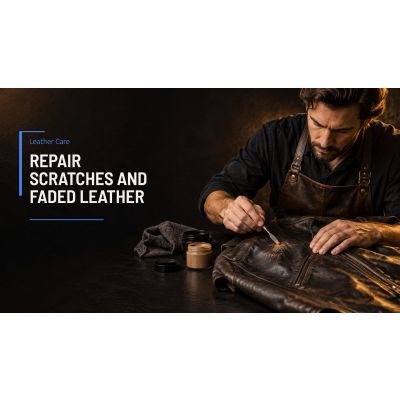
Small scuffs and loose stitching should be dealt with early, before they spread. Leather repair kits can handle minor surface issues. For significant damage, such as torn seams, deep scratches or heavy staining, a professional leather cleaner or restorer is the safer option, since home treatments can make some damage permanent.
Routine at a Glance
- After each wear: wipe the surface with a soft cloth and hang the jacket on a padded hanger.
- As the care label advises: clean gently and condition only if the maker recommends it.
- When it gets wet: blot, air-dry and keep away from heat.
- Off season: store in a breathable garment bag in a cool, dry place.
Frequently Asked Questions
How often should a leather jacket be conditioned?
There is no single interval. Follow the care label or the maker's instructions; whether and how to condition depends on the finish and construction. If the leather feels dry, check with the maker before applying a product, and test it on a hidden spot first.
Can a leather jacket be washed with water?
It should not be soaked, and machine washing is only suitable if the care label allows it. For anything beyond a lightly damp soft cloth, follow the care label or the maker's instructions and test on a hidden spot first. After cleaning, let the jacket air-dry naturally.
What is the right way to dry a wet leather jacket?
Blot the excess moisture with a soft cloth and let the jacket air-dry in a well-ventilated space, away from radiators, heaters and direct sunlight. Direct heat dries leather out and can lead to stiffness or cracks, so a hair dryer should never be used.
How should a leather jacket be stored?
Use a sturdy padded hanger or one with wide shoulders, and keep the jacket in a cool, dry place away from sunlight. For long storage choose a breathable garment bag instead of plastic, because trapped moisture can cause mold or mildew; the care label takes priority.
Written by the Leather Collection Editorial Team.