
 USA
USA  Canada
  Brazil
  Germany
  France
  Italy
Italy  Switzerland
  Sweden
  Spain
Spain  Great Britain
  Russia
  South Africa
  Japan
Japan  New Zealand
  Australia
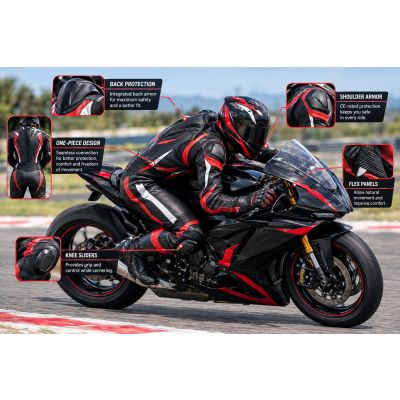
A track day goes smoothly when the gear is chosen and packed before the morning of the event. Organizers inspect riders as well as bikes, so missing a glove, a back protector or a document can end the day before the first session. This checklist covers the riding gear, the paperwork, the comfort items and the spares that riders typically bring, with the standards behind the protective gear explained.
Key Takeaways
- Check the organizer's own rules first: requirements for helmets, suits, boots and back protectors differ from one event to the next.
- A one-piece leather suit is the usual track choice; some organizers, such as WMRC, accept a two-piece suit only if it zips together around the full waist.
- EN 17092 classes AAA, AA and A include impact protectors, while EN 1621 sets the impact levels of the armor itself.
- Pack documents, water, a spare visor, basic tools and a tire pressure gauge alongside the protective gear.
Required Riding Gear
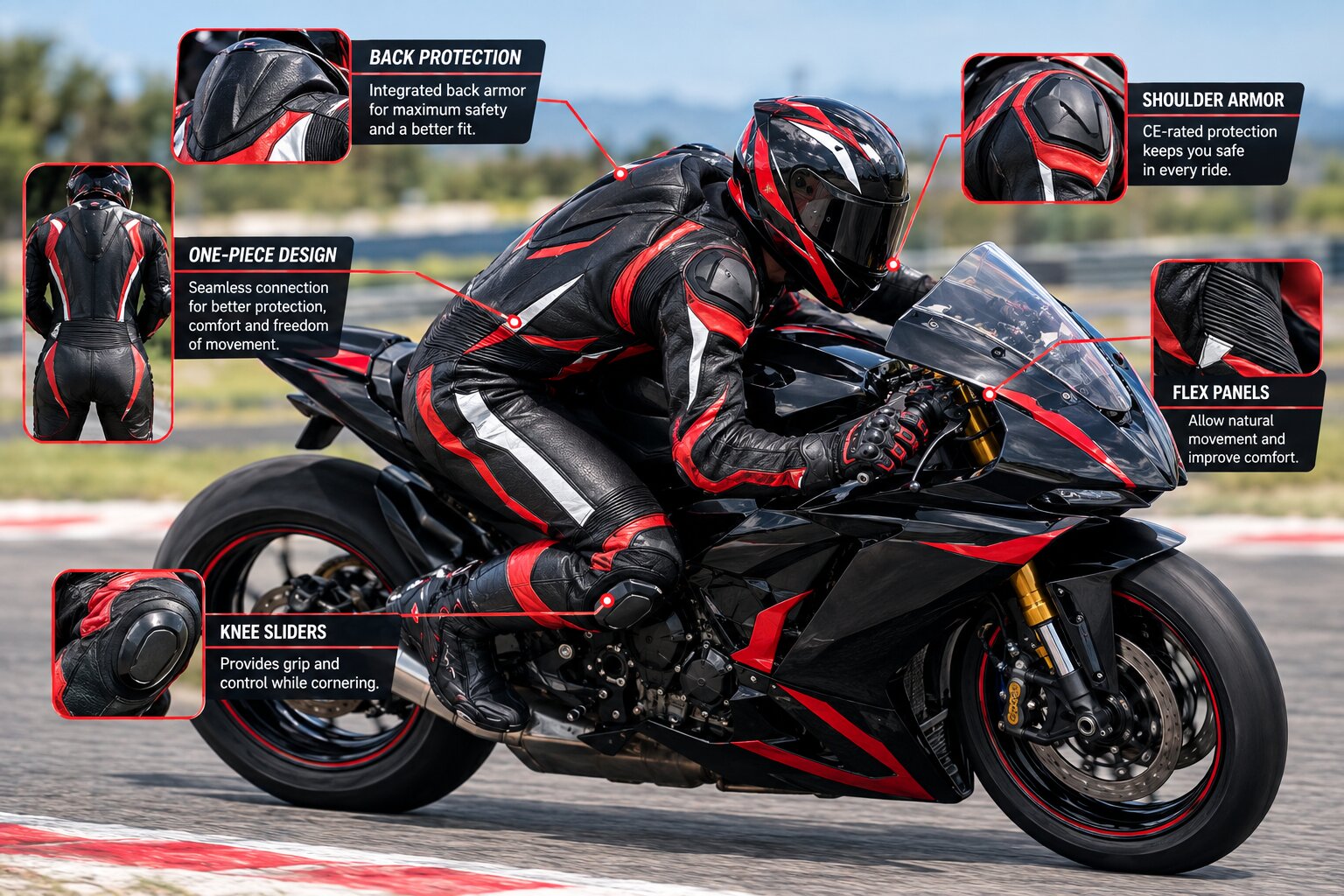
Every organizer publishes a gear list, and most agree on the basics. As one example, WMRC lists an undamaged full-face helmet no older than five years from its manufacture date with Snell M2020 or ECE certification, a one-piece leather suit (or a two-piece zipped around the entire waist), gauntlet-style leather gloves with full wrist coverage, and leather boots that cover the ankles. The same list calls for a separate CE Level 2 back protector reaching from the shoulders to the tailbone, and it states that soft pads sewn into a suit do not meet that requirement. Other organizers set different details, so the event page is the reference.
Choosing a Suit for the Track
Track-day riders generally choose a one-piece suit because jacket and pants cannot separate during a slide. Two-piece suits are easier to put on and take off, and they suit riders who mix track and road use, but the jacket and pants must connect with a full-circumference zipper. Leather Collection offers as well as one-piece suits, and the section shows the full range to compare.
Fit matters as much as the label. The suit should feel snug in the riding position, without pulling across the shoulders or bunching behind the knees, and the armor should stay over the shoulders, elbows, hips and knees when the rider moves. A suit that is loose lets armor drift away from the joint; one that restricts breathing becomes tiring within a few sessions. Measuring chest, waist, inseam, sleeve length and shoulder width before ordering, then comparing the numbers to the size chart, is the usual starting point. A suit such as the can be viewed with its size information before any decision is made.
Standards Worth Knowing
Two standards appear on most protective gear. EN 17092 classifies motorcycle garments as AAA, AA, A, B or C: classes AAA, AA and A include impact protection requirements, class B offers abrasion protection equal to class A without impact protectors, and class C garments provide impact protection for the areas covered by the impact protectors only, with no minimum abrasion protection. EN 1621-1 covers limb joint protectors such as shoulder, elbow, hip and knee armor, and EN 1621-2 covers back protectors. Each part has Level 1 and Level 2, with Level 2 transmitting less force in the standard test. Whether armor is included with a suit varies, so the product description should confirm it.
Boots, Gloves and Back Protector
Boots should cover the ankles, hold the heel in place and close securely, and gauntlet gloves should give full wrist coverage with no gap at the suit cuff, as the organizer above requires. Riders who want boots that match a suit can compare options such as the . Some organizers require a separate back protector, so riders should confirm the rule for the event they have booked.
Documents, Comfort and Spares
Visordown's trackday checklist lists the non-protective items most riders pack: a full motorcycle license (both halves if it is a photocard license) since organizers require it, a spare visor, waterproofs for a wet forecast, plenty of water and light food rather than a heavy meal, a fuel can and funnel because bikes use much more fuel on track than on the road, and a tool kit with sockets, spanners, screwdrivers, pliers, tie-wraps and duct tape. A tire pressure gauge and spare brake and clutch levers for recovery after a minor spill are on the same list.
Bike Preparation
The motorcycle is inspected as well. WMRC, for instance, requires headlights, brake lights, indicators, mirrors and reflectors to be taped or removed, plates removed, no fluid leaks or obvious mechanical damage, a working kill switch and fully operational brakes, and cameras tethered to the bike. Riders should read the matching section of their own organizer's rules, since details such as tire types and noise limits differ by venue.
Quick Packing List
- Full-face helmet that meets the organizer's standard, plus a spare visor
- One-piece leather suit, or a two-piece that zips together around the waist
- Back protector, if required or recommended by the event
- Gauntlet gloves and ankle-covering boots
- License, booking confirmation and any documents the organizer requests
- Water, light food and waterproofs
- Tool kit, tire pressure gauge, tape, fuel can and funnel
Riders ready to compare protective gear for track and road use can review
to find options built around fit and riding use. The is another product example to check against the list above.Frequently Asked Questions
What gear is required for a motorcycle track day?
Requirements depend on the organizer, but a full-face helmet, leather suit, gauntlet gloves and ankle-covering boots are the common baseline. Some events also mandate a separate back protector. Because rules differ between organizers and venues, riders should read the event page before packing and bring any documents the organizer asks for.
Is a two-piece suit allowed on track?
Some organizers, such as WMRC, accept a two-piece suit only if the jacket and pants connect with a zipper that runs around the full waist. A one-piece suit is generally the recommended choice because the garment cannot separate in a slide. The event rules state which option is accepted, so confirm before the day.
Does EN 17092 class AA cover impact protection?
Classes AAA, AA and A of EN 17092 include impact protection requirements, meaning garments in those classes carry impact protectors. The armor itself is rated separately under EN 1621, where Level 2 transmits less force than Level 1 in the standard test. Riders should check both the garment class and the armor level.
Why does a back protector need to be separate?
Some organizers specify a separate CE Level 2 back protector that spans from the shoulders to the tailbone, and they state that soft pads sewn into a suit do not satisfy that rule. The requirement varies by event, so the organizer's gear page is the place to confirm whether a separate protector is needed.
What else should be packed besides protective gear?
Common extras are a full license, a spare visor, water and light food, waterproofs, a tool kit, a tire pressure gauge and spare levers. A fuel can and funnel are also worth bringing since bikes consume more fuel on track. A list from a trackday guide should be adapted to the venue and the bike.
Written by the Leather Collection Editorial Team.